






We’ve all been there: at checkout, prompted to donate a dollar. It brings to mind that old Simpsons scene, where someone is guilted into giving for starving children. Well-intentioned, sure, but impersonal and a bit awkward.
This is just one example of why companies need to totally rethink the ways they give back. Charitable giving hit $592 billion in the U.S. last year, but the story behind that total giving pool is evolving in ways that should make all of us think twice.
Major gifts, for example, are rising. But here’s the rub: smaller donations are shrinking at an alarming rate. Larger nonprofits saw more growth than smaller ones. Online giving rose about 11 percent, but it’s still a highly fragmented and, for the most part, sub-optimal experience.
Today, the average donor is a little like Bart Simpson at the checkout line: underwhelmed and unmotivated. When they do give, and some companies have understood this, customers want to give based on their values. They’re asking: Is this personal? Is this impactful? Is it more than just a box to check?
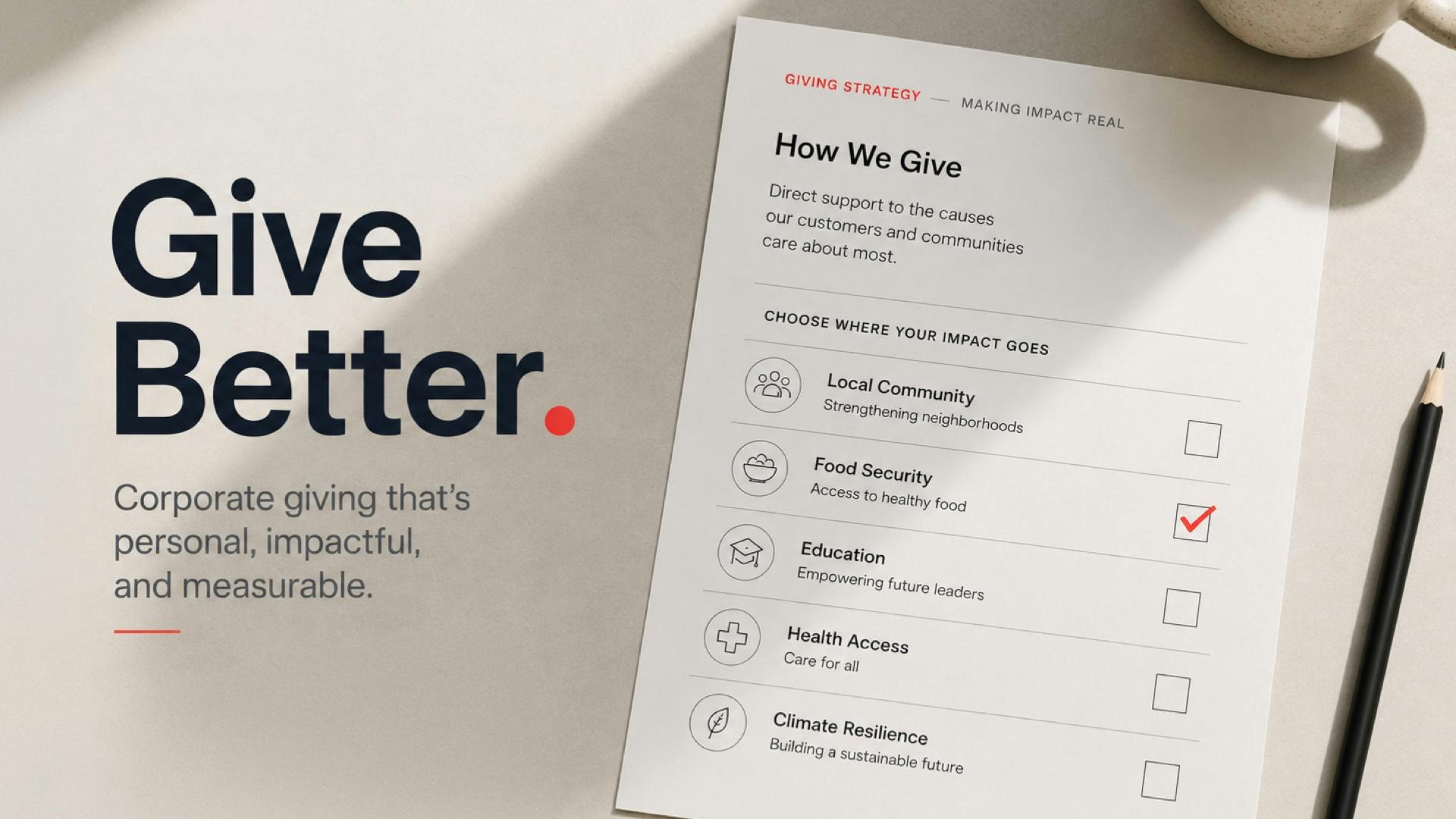
Some companies have already taken to heart the need to Give Better. Target, for example, lets customers direct local giving, not just to a few of the usual nonprofit suspects, but to literally thousands of community partners across the country. NVIDIA doubles employee donations. Bombas donates one item per purchase. Google matches donations and volunteer time, while Wells Fargo lets employees choose local causes.
Donors increasingly value alignment with personal beliefs and want to see real impact, so corporate giving needs to be more strategic and values-driven. This sets the stage for companies to transform their giving programs into more personal, impactful experiences.
The key insight is building what could be called the collaborative edge. Companies that engage employees, customers, and communities in how, where, and why they give can create a holistic giving journey. Giving becomes a means to draw stakeholders in and allow them to participate in how the company gives back.
With its tech- and AI-enabled giving platform, in/PACT has collected data that definitively links the amplitude of the impact to the intensity of the engagement. For a retail loyalty program, this means the degree to which customers actively embrace and participate in a giving program correlates directly to the extent of the impact achieved. The more you engage, the more impact rises.
Helping companies give better also means helping them give to nonprofits that are not just the “usual suspects,” meaning the large nonprofit organizations. Finding smaller nonprofits that align with corporate values can help extend and amplify impact.
For example, The Farmlink Project, a nonprofit focused on rescuing surplus food, has partnered with companies like Kroger and Chipotle. Through such partnerships, they redirected over 130 million pounds of food to communities in need. A retailer’s unsold produce became meals, turning disposal costs into community impact while enhancing the company’s sustainability and community engagement story. This is a great example of the collaborative edge: corporate clout enhancing community impact.
Another area that’s stuck in the past is the measurement of impact: how each nonprofit dollar produces, or in many cases does not produce, results. For the billions of dollars given every year, the landscape is sorely lacking in KPIs and ROI, or Return on Impact. To give better, companies need to hold themselves accountable to measure and constantly improve the statistics around what, why, and how they’re giving.
The companies that will stand out are those that help their stakeholders give better by making giving personal, specific, meaningful, and measurable. It’s time to move beyond the awkward checkout ask and into a world where giving is intentional and transformative. But it is also time to make impact real by making it accountable. You can’t give better if you can’t measure what needs to be improved.
To give better, companies must adopt KPIs that measure real impact, such as tracking the percentage of donated funds that directly reach beneficiaries, the number of community partnerships formed, or tangible outcomes, such as meals served or shelters built. When giving programs are held to these meaningful metrics, philanthropy becomes more than intention; it becomes measurable change.
Today, for companies as for donors, it’s become much more than just about giving back.
It’s time to Give Better.
