




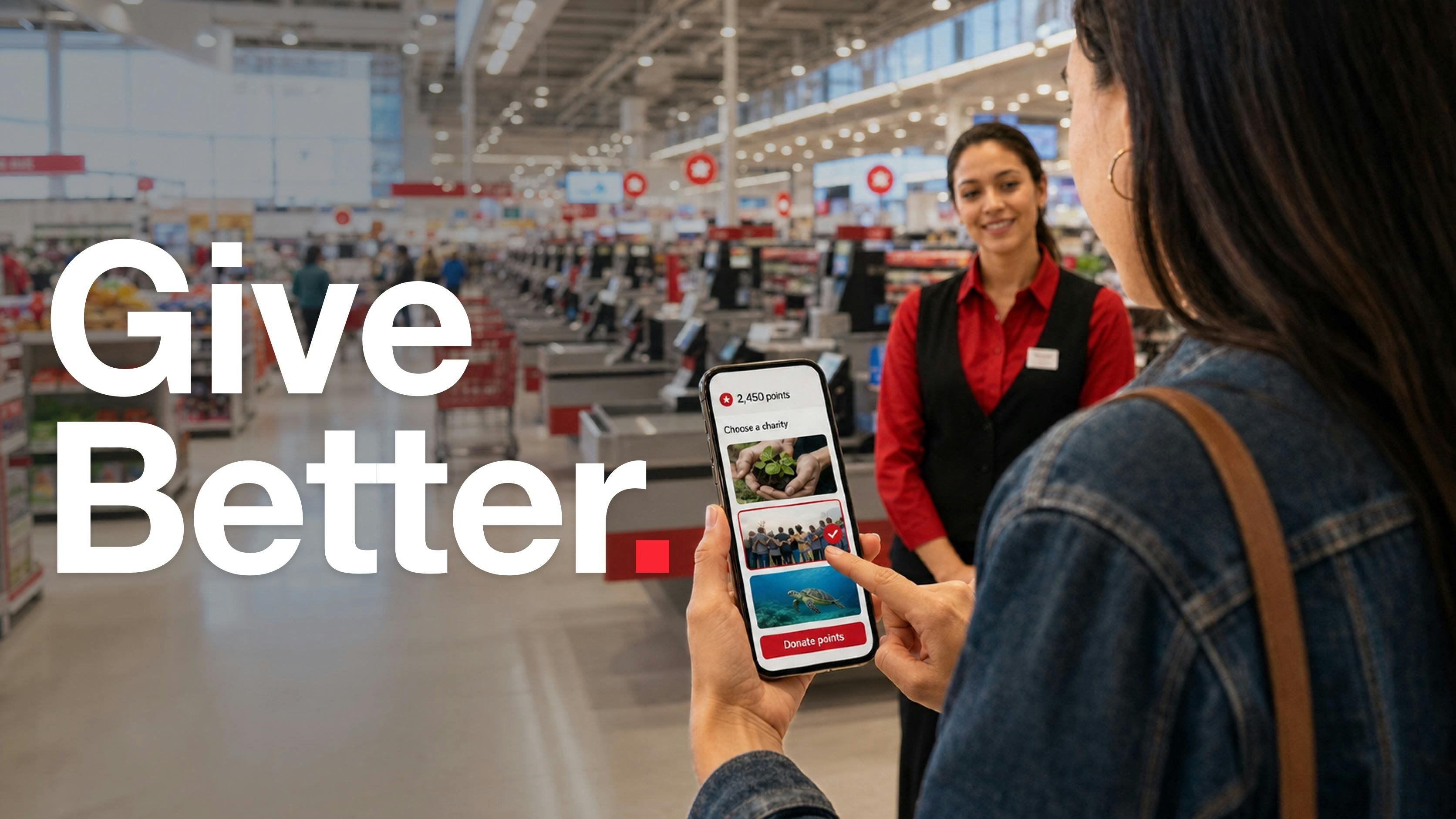
When I think about the idea of "giving better," I don't think it simply means helping companies donate money or add a giving component to a campaign. That is certainly part of it, but I think the opportunity is bigger than that.
To me, giving better means helping companies bring generosity into the customer experience in a way that feels simple, authentic, measurable, and human.
For many clients, giving can be a meaningful way to connect with their customers and communities. But it can also be complicated to execute. There are decisions to make around causes, nonprofits, customer experience, reporting, technology, and operations. What may seem like a simple donation experience on the front end can involve a lot of coordination behind the scenes.
That is one of the areas where in/PACT creates value today. We help take something that can be operationally complicated and make it easier for clients to bring to life. The technology is a big part of that, but so is the service side, helping clients think through the right approach, how to structure programs, and how to create an experience that feels meaningful rather than just transactional.
Right now, we help clients make giving better by reducing friction. We give them a more organized and scalable way to bring giving into their customer experience. We also help connect generosity to things many companies already care about, like customer engagement, loyalty, and brand purpose.
Enabling giving is not the same as creating a better giving experience
But I think there is an important distinction between enabling giving and creating a better giving experience.
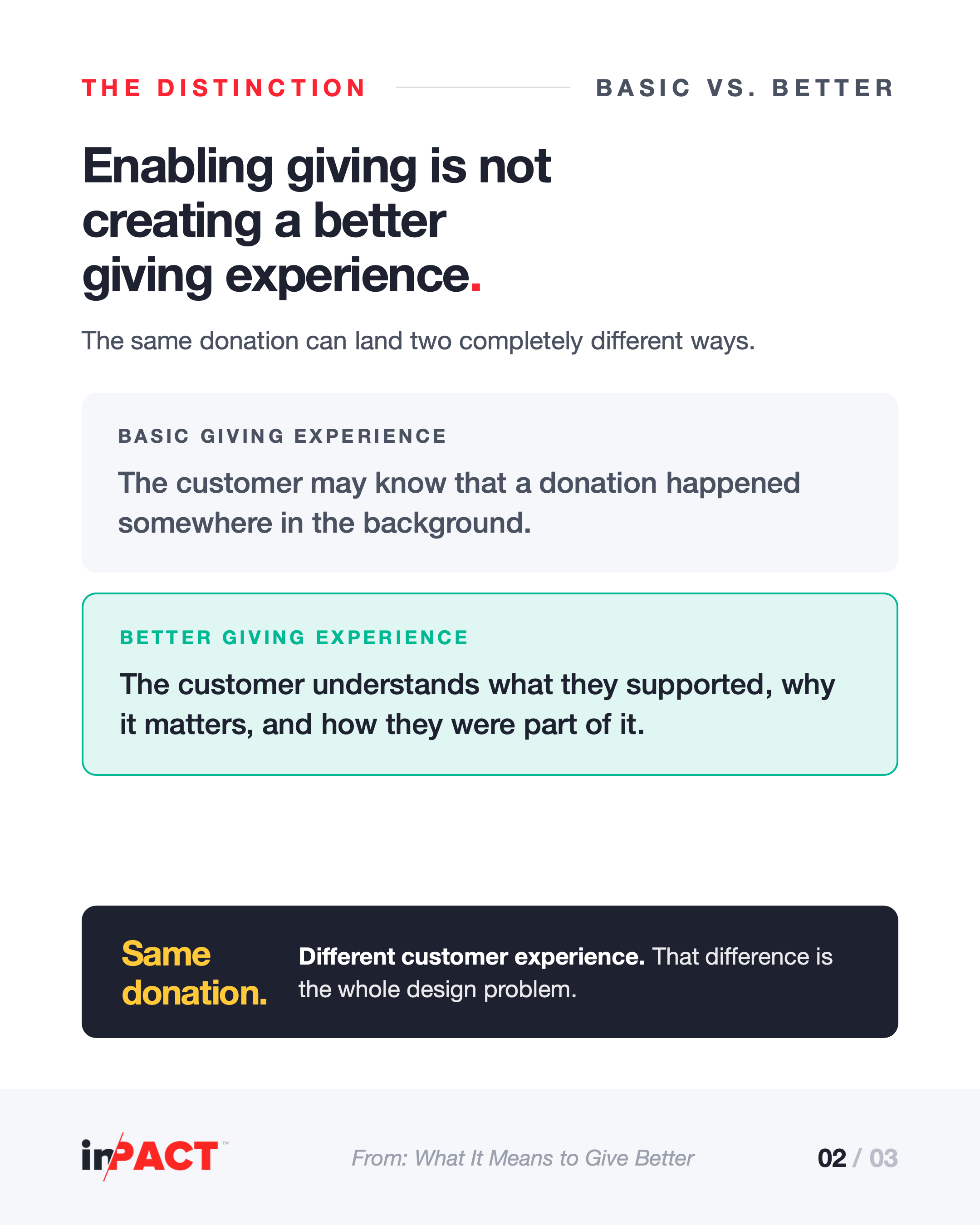
In a basic giving experience, a customer may know that a donation happened somewhere in the background. In a better giving experience, the customer understands what they supported, why it matters, and how they were part of it.
That difference matters.
Customers want experiences that feel relevant and easy to understand. When giving is built into a customer journey in the right way, it can turn a normal interaction into something more meaningful. It gives the customer a sense that their choice, vote, purchase, points, reward, or participation helped contribute to something beyond the transaction.
That does not mean the experience needs to be complicated. In fact, it should probably be the opposite. Giving better should make participation feel easy. Customers should not have to work hard to understand what is happening or why it matters. The best experiences are clear, simple, and emotionally rewarding.
I also think there is an opportunity to make giving more personal. Different customers care about different causes, and where possible, giving experiences should reflect that. Whether through customer choice, cause personalization, or more relevant storytelling, there may be ways to make the experience feel more connected to the individual customer.
What community giving programs should make visible
For clients, giving better also means making the value more visible.
Today, many giving programs focus on dollars donated, which is obviously important. But that is only one part of the story. Clients also need to understand how customers are engaging. Are they participating? Are certain causes resonating more than others? Are campaigns driving repeat behavior? Is giving helping strengthen loyalty or brand affinity?
That kind of visibility could help clients view giving as more than a campaign element. It could become a strategic part of the customer experience.
This is where dashboards and more specific metrics could be especially valuable. If we can help clients better understand customer participation, engagement, cause preferences, campaign performance, and impact, we can make giving more actionable. We can help them learn what is working, improve future programs, and communicate impact more clearly to their customers.
One area where I think there is room to grow is helping clients connect the dots between giving, customer behavior, and measurable impact. We already have a strong technology and service foundation, but there is an opportunity to make the value even clearer for both clients and their customers.
There are also parts of the process that are still more manual than we would probably want long-term. As we think about the Give Better platform, part of the opportunity is figuring out how to scale more of that work through technology while still keeping the experience thoughtful and human.
From offering giving to designing giving experiences
Big picture, I think "giving better" means helping companies move from simply offering giving to creating better giving experiences.
It means making giving easier for clients to manage, easier for customers to participate in, and easier for everyone to understand. It means making the experience feel aligned with the brand, meaningful to the customer, and measurable for the business.
The aspiration for in/PACT is not just to help companies give. It is to help them create giving experiences that customers understand, feel good about, and want to be part of.